TOTAL NUMBER OF SPECIES RECORDED IN BRITAIN AND IRELAND COMBINED IN 2015

As of 10 November 2015, a total of 430 species have been recorded this year

Total Pageviews

Monday, 30 August 2010

SEMIPALMATED SANDPIPER in LOTHIAN for 4th day


This very cofiding juvenile SEMIPALMATED SANDPIPER has been present at John Muir Country Park, near Dunbar, for several days now (this image taken by John McInnes)
Great views today in the bright sunshine - no wind either. Bird with the Dunlin flock on the flats opposite the Hedderwick Burn bridge.1 Bonxie and 1 Red-throated diver on the sea directly opposite the toilet block (Allan Finlayson)
There was another juvenile SEMIPALMATED SANDPIPER at Dawlish Warren (South Devon) last week and these two follow hard on the heels of three different moulting adults earlier in the month (in Cumbria, East Yorkshire and in Dorset) (Lee G R Evans)

Sunday, 29 August 2010

Bedfordshire RED-BACKED SHRIKE - second day - DIRECTIONS

I was finally able to get over and see Steve Heath's stupendous find this evening - the adult female RED-BACKED SHRIKE at Biggleswade Common. The bird was showing exceptionally well in the few scattered bushes lining the fence and railway embankment at TL 186 472, about 100 yards NW of the sewage works compound. It fed just once on a large Beetle and then disappeared deep into the bush to digest and eventually choke up a pellet.

DIRECTIONS

From the A1 roundabout in north Biggleswade, turn east along the main A6001 and turn left on to Sun Street and then left again on to St John's Wood Road. Continue over the railway and then turn left on to Furzenhall Road and continue along this narrow metalled road for about a mile to just before the sharp bend and entrance to Furzenhall Farm. Park sensibly in this area on the verge and follow past the gate on the concrete track to the sewage works entrance, bearing right and continuing NW along the perimeter fence. The track peters out at the wire fence (be careful not to cause any damage here, as cows are currently in this field) and after a further 80 yards, the shrike is favouring the slightly raised embankment line of the railway.

Lee G R Evans

Friday, 20 August 2010

This week's rare MARSH TERNS


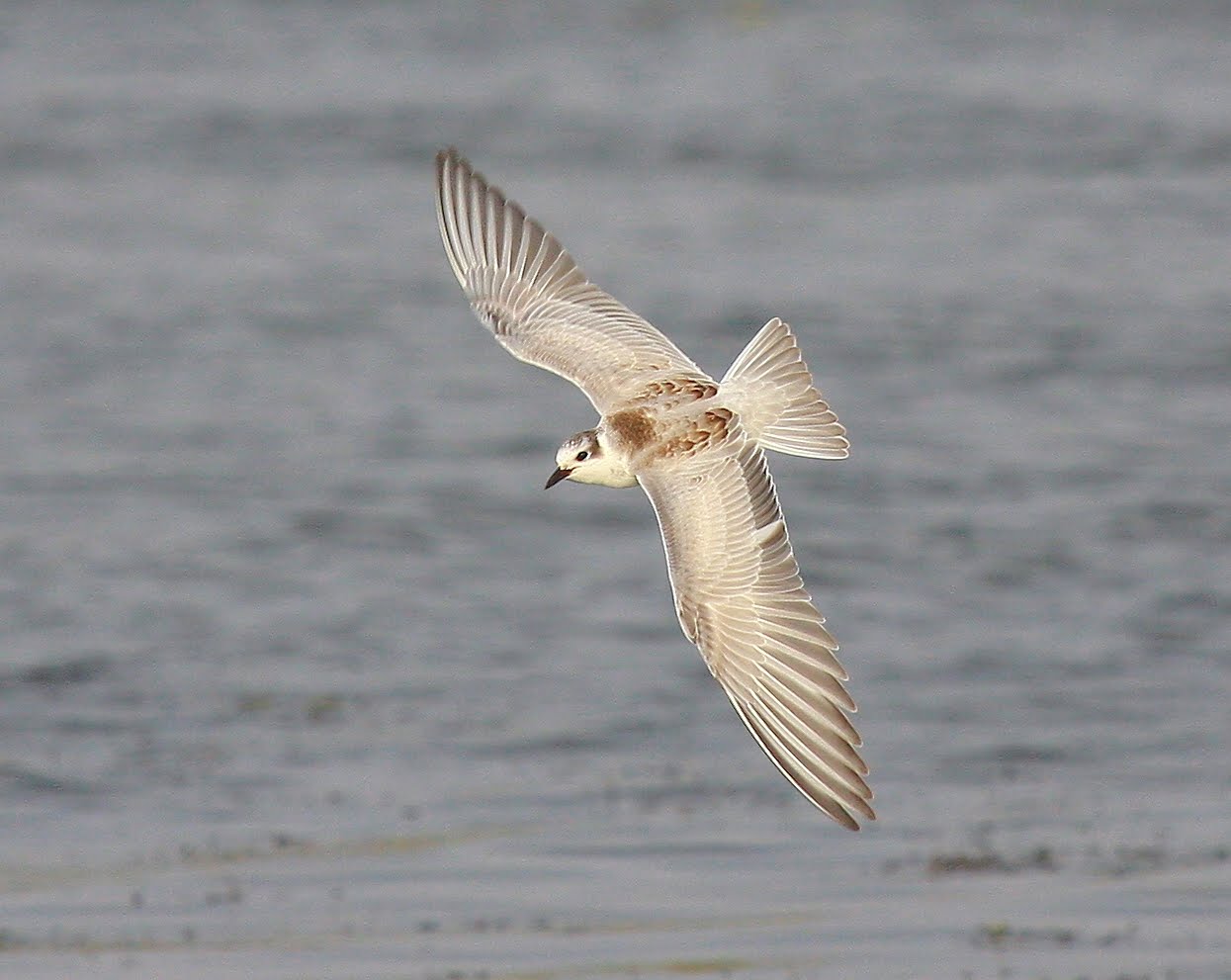
The juvenile WHITE-WINGED BLACK TERN at Hornsea Mere, East Yorkshire (Glyn Sellors)


An exceptionally long-staying WHISKERED TERN - still present at Saltholme Pools RSPB (Cleveland) (Steve Clifton)


The Friday Review - Week 33

After putting on a good show for most of the week, the adult male LESSER GREY SHRIKE was nowhere to be found today in the Kelling Hard vicinity of North Norfolk, denying many an opportunity to see this handsome eastern vagrant this coming weekend. In fact, the region had little to offer today, other than the long-staying adult COMMON CRANE at Cley and a scattering of passage waders, including juvenile Little Stints and both Curlew and Wood Sandpiper.

The record-breaking juvenile WHISKERED TERN continues to linger in Cleveland at Saltholme Pools RSPB, whilst a juvenile WHITE-WINGED BLACK TERN spent a second day at Hickling Broad (Norfolk). A wave of predominantly juvenile BLACK TERNS also swept across the southern half of Britain this afternoon.

In North Lincolnshire, a worn adult 'peep' indicative of SEMIPALMATED SANDPIPER continues at Alkborough Flats, being seen several times today but mainly at long range, whilst two PECTORAL SANDPIPERS arrived at the scrape at Low Newton (Northumberland) this afternoon. Large numbers of WOOD SANDPIPERS were also scattered around today, along with the first thrust of juvenile LITTLE STINTS and juvenile SPOTTED REDSHANKS.

SPOTTED CRAKES on offer include the showy bird at Shibdon Pond, Blaydon (County Durham) (favouring the muddy bay in the NE corner) and the 1-2 at Grove Ferry NNR (Kent) (from the David Feast Hide).

At Dungeness (Kent), an adult PURPLE HERON remains on Denge Marsh, along with the CATTLE EGRET and GREAT WHITE EGRET, with a further juvenile CATTLE EGRET still in Essex and roosting this evening at Wat Tyler Country Park.

Drift migrants such as BARRED WARBLER have been appearing since last weekend, with two on the Farne Islands (Northumberland) and another on North Ronaldsay (Orkney), with a juvenile RED-BACKED SHRIKE at Saltburn (Cleveland) with the only WRYNECK today at Beacon Lane, Kilnsea (East Yorks). Generally speaking, there has been a major arrival inland of Common Redstart, Whinchat and Spotted Flycatcher, spiced up by the occasional Pied Flycatcher and Wood Warbler.

After the SYKES'S BOOTED WARBLER on Unst (Shetland) earlier in the week (see Dougie Preston's outstanding images above), Scotland has quietened down since, with the 4 adult drake SURF SCOTERS off Blackdog Beach (Aberdeenshire) and the COMMON CRANE at Montrose Basin (Angus/Dundee) highlighting today, as well as the continuing PECTORAL SANDPIPER on Carden Flood at Vane Farm RSPB (Perth & Kinross).and the eclipse drake RING-NECKED DUCK there.

GREAT SHEARWATER passage has also been experienced in West Cornwall today with 1-3 seen (Porthgwarra and Lizard Point) and another 2 off Start Point (South Devon).

Seawatching in western Ireland today yielded a WILSON'S STORM PETREL and 2 GREAT SHEARWATERS off Galley Head (County Cork), the latter species also passing the Bridges of Ross (County Clare), along with 2 adult SABINE'S GULLS, as well as off Cape Clear (County Cork)

New NORTHERN IRELAND BIRDING website

http://nibirding.blogspot.com

This is the new address for the NORTHERN IRELAND BIRDING email group

Wednesday, 18 August 2010

First LESSER GREY SHRIKE of the year


The first LESSER GREY SHRIKE of the year - an adult - was discovered at Kelling Hard (North Norfolk) yesterday afternoon and was still present today and showing well. Chris Morgan obtained the excellent shots.

Monday, 16 August 2010

MEGA: SYKES'S BOOTED WARBLER in Northumberland

A SYKES'S BOOTED WARBLER (rama) is present in Northumberland for a second day and showing well. The bird was discovered yesterday afternoon and was eventually seen by about 45 local observers before dusk. Duncan Watson obtained an excellent series of shots of the bird.

Duncan also kindly supplied these directional details. ''The bird is in bushes in the dunes, east of Druridge Bay Country Park. Best access is via the minor road to Hadston Carrs, off the A1068 about 1km north of the country park entrance. Turn right at the end and follow this south for about 750m. Approx grid reference is NU274002''

Sykes's Booted Warblers are a very rare vagrant in Britain with few confirmed records; they are also a trzky id and some occurrences have been left unrecorded.